The central massif wrings the rain out of two opposing monsoons, so the island keeps a wet zone, a dry zone and a cloud forest on top. A quarter of its flowering plants, and almost all of its amphibians, exist nowhere else.
Forest, plain and cloud
Six places worth the early start.
None of these needs more than a night nearby. All of them reward being at the gate when it opens, which in practice means around six in the morning, which in practice means going to bed early.
Sinharaja, lowland wet-zone rainforest
Wet zone · South-west
Sinharaja සිංහරාජ
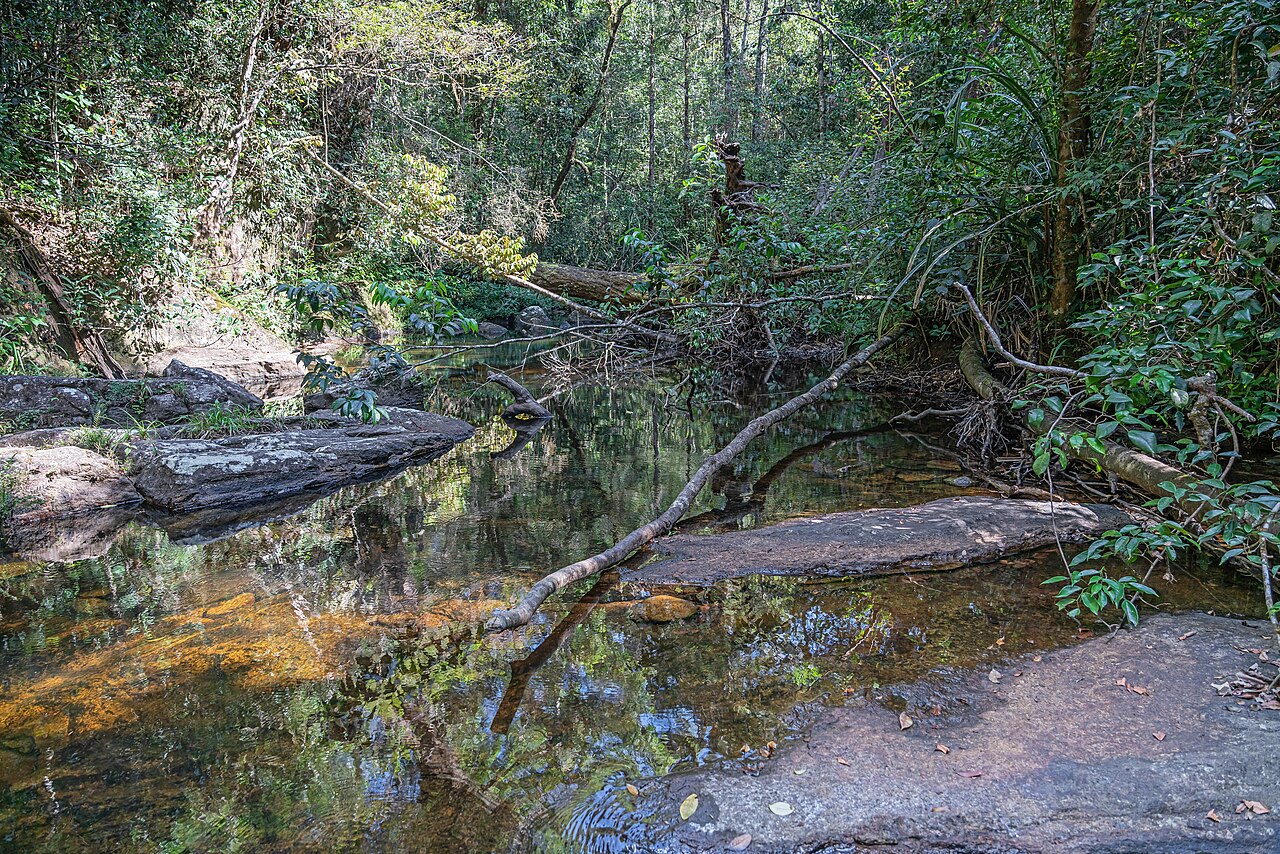
The last big block of primary lowland rainforest, and a UNESCO site where most of the canopy trees grow nowhere else on earth. Walk it with a guide and wait for a mixed feeding flock — twenty species moving through the understorey at once, blue magpies leading.
Best Jan–Mar & Aug–Sep · leech socks in the wet
World’s End, before the cloud closes
Montane · 2,100 m
Horton Plains හෝටන් තැන්න
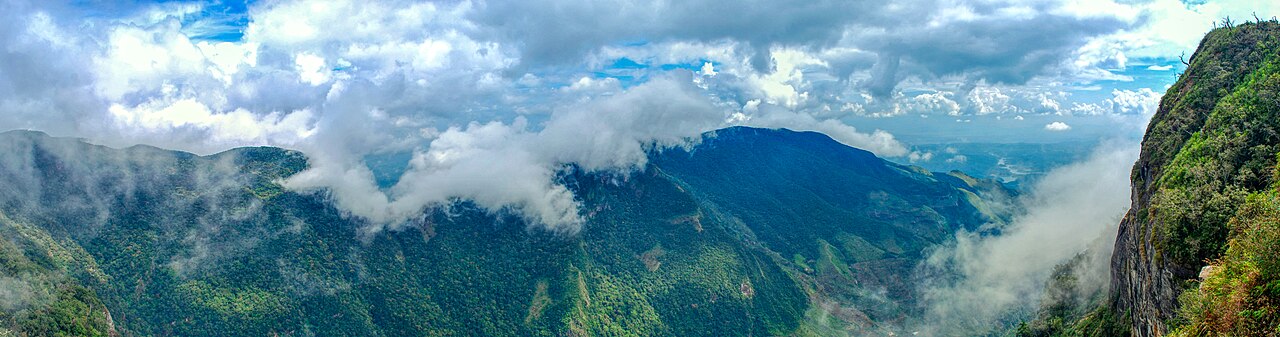
Cloud forest and wind-cropped grassland ending abruptly at World’s End, an 880-metre drop with the southern plains laid out below. Start the loop at first light: by nine the cloud closes and the view is a white wall until tomorrow.
Gates 6 am · 9.5 km loop · bring a fleece
Sri Lankan leopard, Yala
Dry zone · South-east
Yala යාල
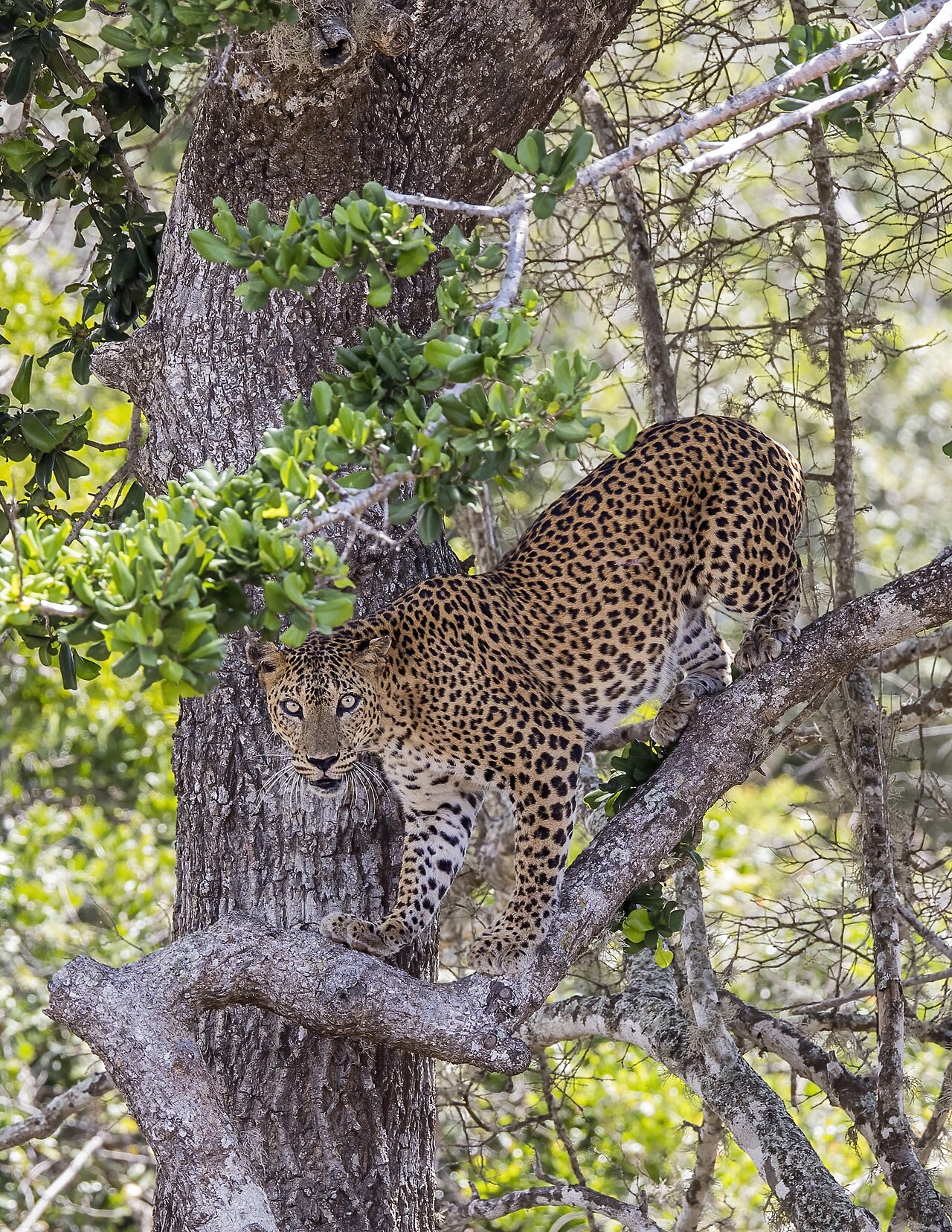
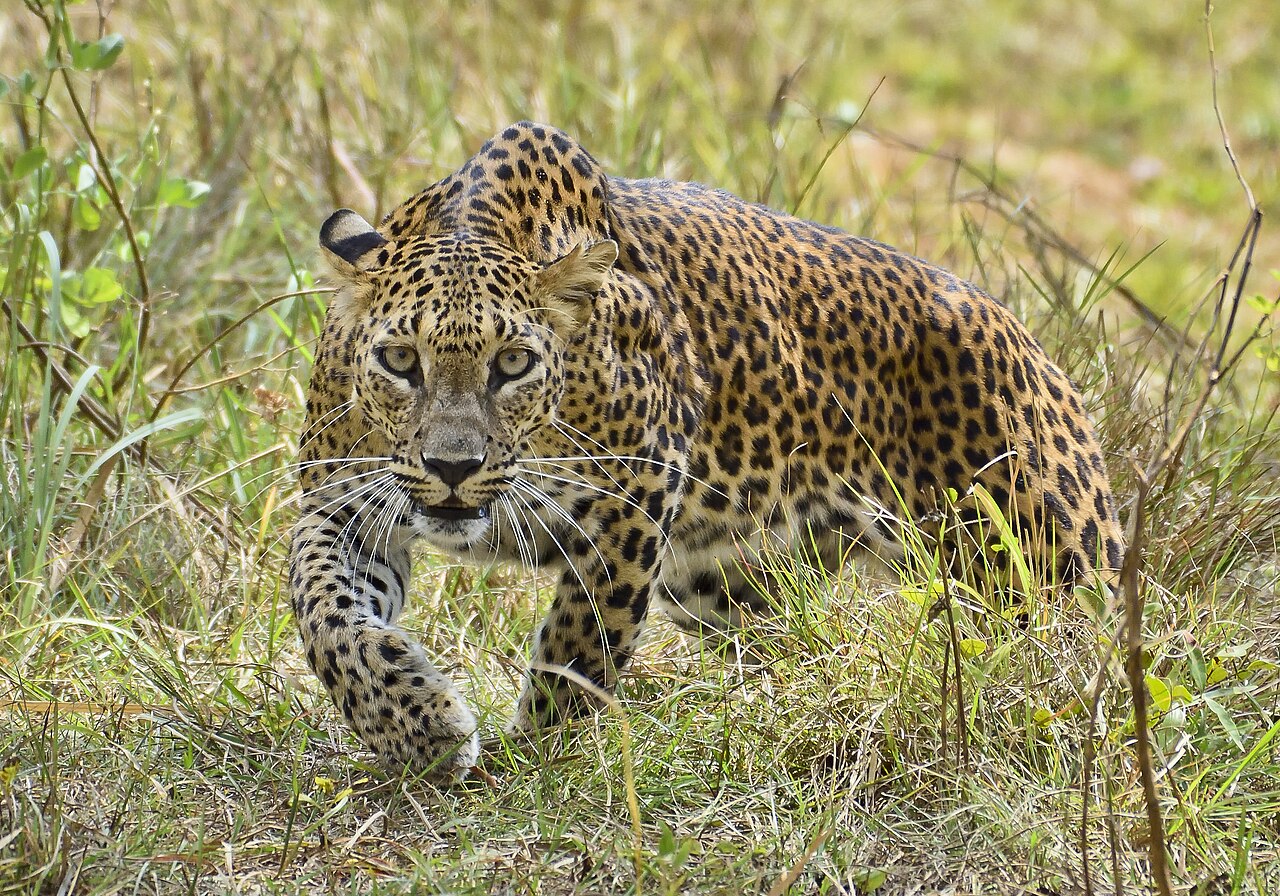
Block 1 holds one of the densest leopard populations anywhere and pays for it in jeep traffic — at a sighting you may be one of thirty vehicles. Go at opening, ask your driver to wait somewhere quiet, and treat a leopard as a bonus rather than the point.
Feb–Jul driest · usually shut Sep–mid Oct
Wilpattu, the quiet alternative
Dry zone · North-west
Wilpattu විල්පත්තු
The biggest park on the island and the quietest: dry forest scattered with villus, natural sand-rimmed lakes that fill and shrink with the rains. Leopard sightings are rarer and better earned, and sloth bear come out for the palu fruit in June and July.
Feb–Oct · half the jeeps of Yala
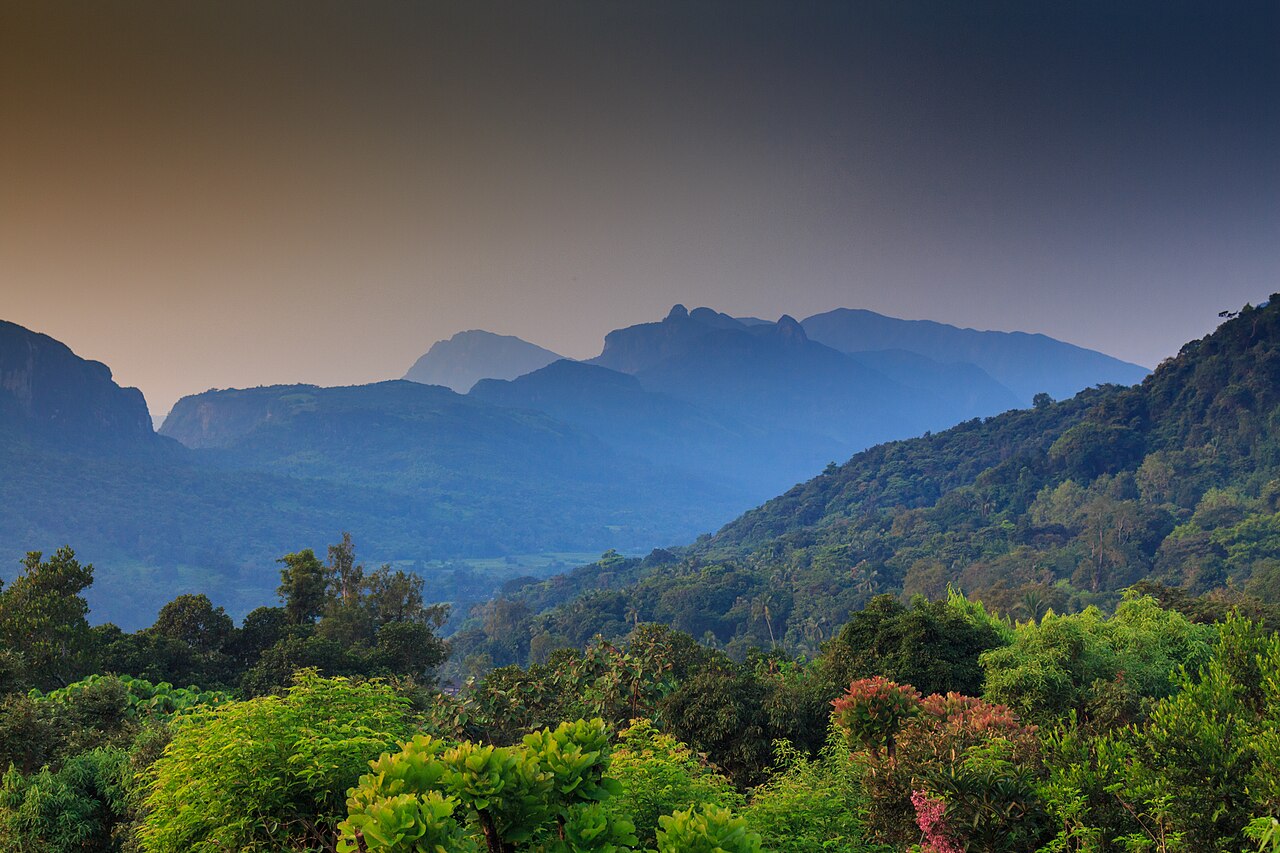
The Knuckles, the mist-laden range
Knuckles · 900–1,900 m
Dumbara Mitiyawatha දුම්බර මිටියාවත
The Knuckles range — named for a fist seen from Kandy, called the mist-laden valley in Sinhala. Five vegetation zones stacked into a day’s walk, terraced villages still growing highland rice, and trails you will mostly have to yourself.
Guide required inside the reserve · Jan–Apr driest
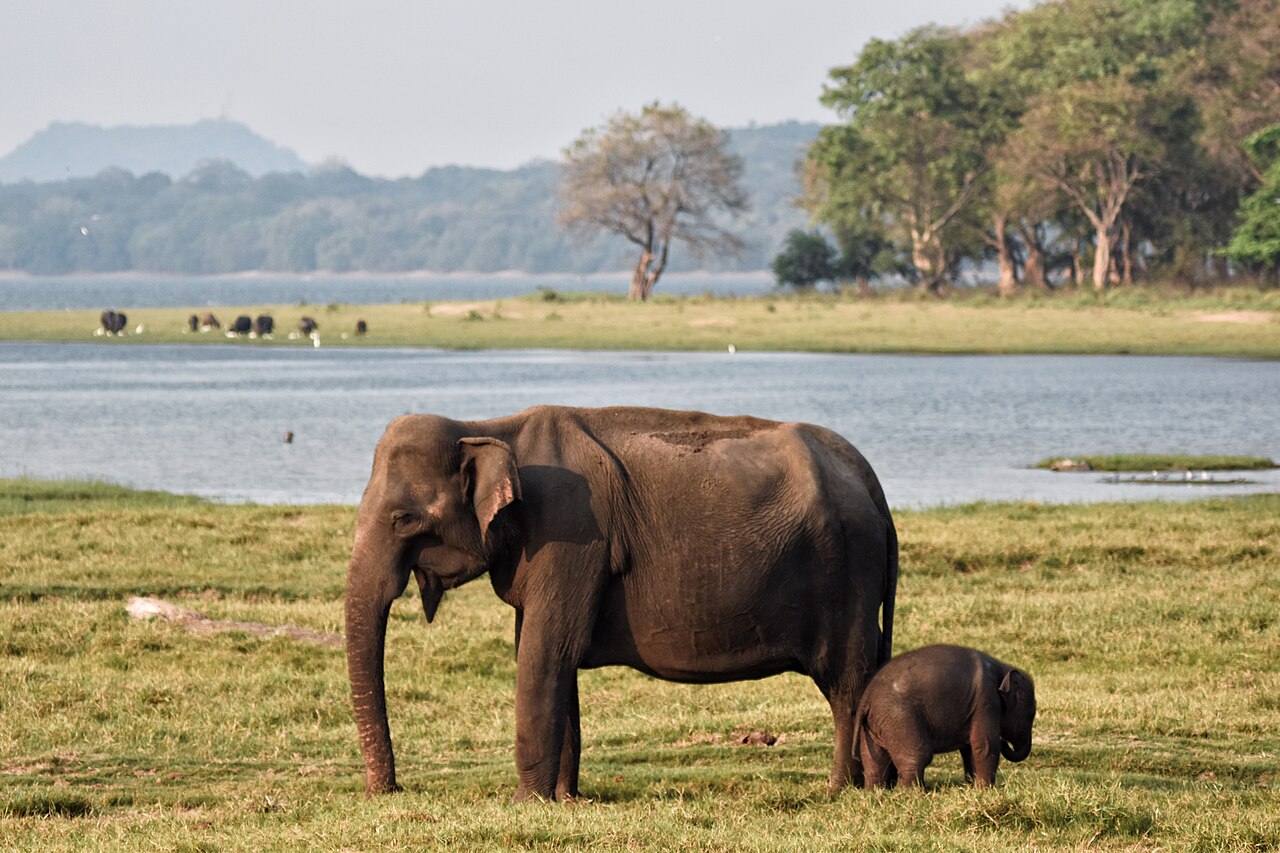
Elephants on the Minneriya tank bed
Minneriya & Kaudulla
The Gathering අලි එකතුව
As the dry season pulls the tank water back, hundreds of wild elephants walk out onto the exposed grass of the reservoir bed to feed and to find each other — the largest seasonal gathering of Asian elephants anywhere. Which tank they are on shifts week to week; your driver will know before any website does.
Peaks Jul–Sep · late afternoon
Reef, lagoon and open ocean
The sea is half the point.
The island sits on a narrow shelf with deep water close in, which is why you can be beside a blue whale an hour after breakfast. Reef, lagoon and surf each have their own season and their own coast.
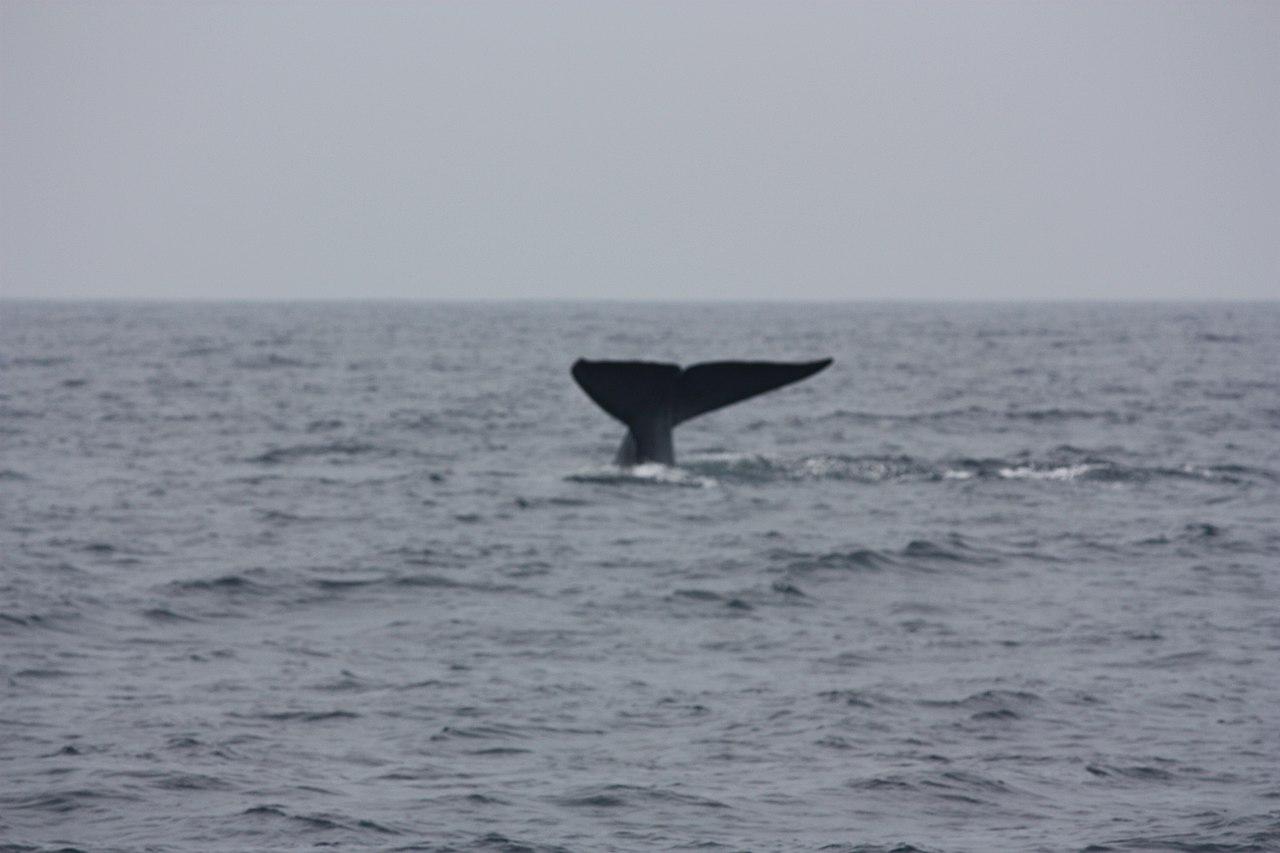
Blue whale off the south coast
South coast · Nov–Apr
The whale line තල්මසුන්
The continental shelf runs close to shore off Dondra Head, which is why blue whales — the largest animal that has ever lived — pass within an hour’s boat ride of Mirissa. Sperm whales travel in groups here too. Pick an operator that keeps its distance and switches the engine off; plenty do not.
Boats leave 6–7 am · take seasickness tablets
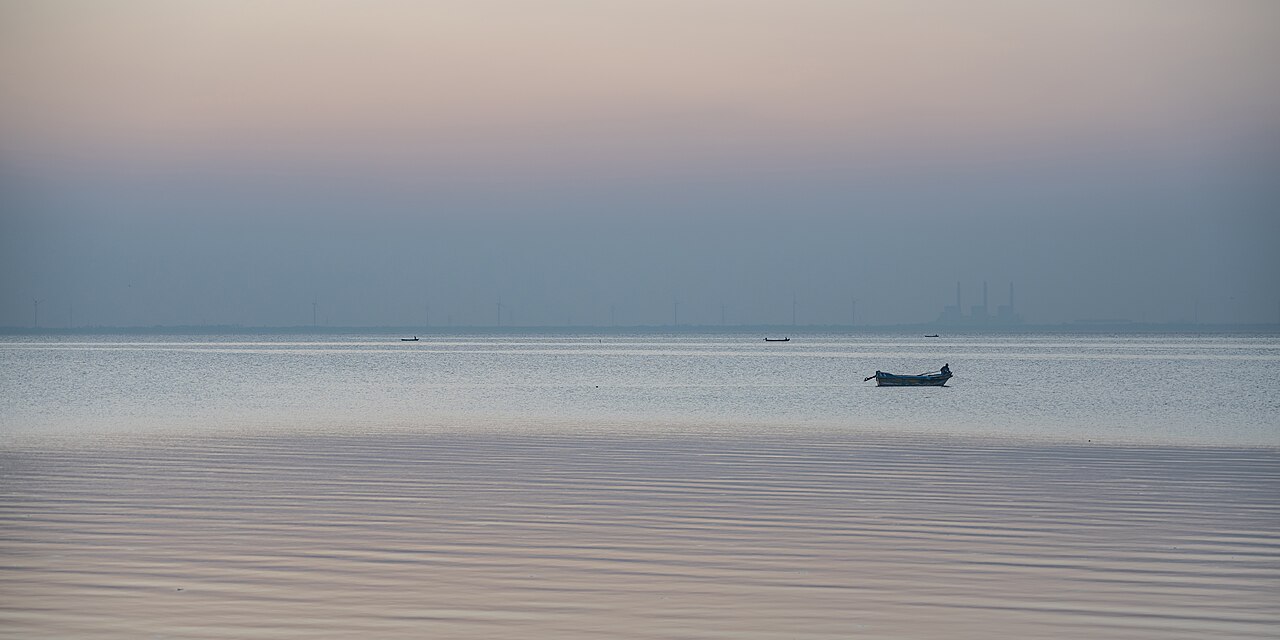
Puttalam lagoon, near Kalpitiya
North-west · Nov–Mar
Kalpitiya කල්පිටිය
A lagoon-and-sandbar peninsula where spinner dolphins run in pods of hundreds and the flat water has made it the island’s kitesurfing centre. Bar Reef, just offshore, is the largest coral reef in Sri Lankan waters.
Kite season May–Sep · dolphins Nov–Mar
Trincomalee, the east-coast base
East · Trincomalee
Pigeon Island & the east reefs පරෙවි දූපත
Shallow coral and blacktip reef sharks a short boat ride from Nilaveli, and the east coast’s calm months are exactly when the south is being rained on. Go early, wear a rash vest instead of sunscreen, and do not stand on the coral.
May–Sep · snorkelling, not diving
Sand and swell
Which beach, for what.
The coasts trade places with the monsoon — south and west from November to April, east from May to September — so “the best beach” is always a question of when. Pick by purpose instead.
Weligama bay, boards and boats
South · Nov–Apr
Learning to surf වැලිගම
Weligama’s long sandy-bottomed bay is one of the easiest places anywhere to stand up for the first time — board hire and instructors every fifty metres, waves that forgive. Around the headland, Hiriketiya’s green horseshoe cove has the same idea with more style and less space.
Mornings before the wind · boards by the hour on the sand
Whiskey Point, up the coast from Arugam Bay
East · Apr–Oct
Arugam Bay ආරුගම් බොක්ක
The east’s surf town, and the island’s one internationally famous wave: Main Point, a long peeling right off the rocks. Learners get Whiskey Point and Peanut Farm up the coast, elephants occasionally cross the road to Panama, and the whole place runs on exactly the opposite season to the south.
Main Point is not for beginners · tuk-tuk between breaks
Goyambokka, near Tangalle
Deep south · Nov–Apr
The quiet coves තංගල්ල
Past Tangalle the crowds thin and the coast breaks into small palm-hung coves — Goyambokka, Silent Beach, Hiriketiya’s sleepier neighbours. At Rekawa, just east, a community group runs night watches on a major turtle nesting beach: red torchlight, no flash, and the money stays in the village. It is the honest version of every “turtle hatchery” on the tourist strip.
Turtles nest year-round, peak Apr–Jul · go with the Rekawa watch
Before you swim
Read the water before you trust it
The sea here is more dangerous than anything in the parks: many beautiful beaches drop off steeply and run serious rips, lifeguards are rare, and the safe beach of one season is the wild one of the next. Swim where you see local families swimming, ask your guesthouse, and treat an empty perfect beach as a question rather than an invitation. While you are on the south coast: the stilt fishermen at Koggala are these days mostly a posed photograph for a fee — pay or pass, but know what you are photographing.
Check the month against the monsoon picker before you plan a beach week
Found here and nowhere else
Six to look for.
Sri Lanka has 26 endemic birds, 20 of them confined to the wet-zone rainforest, plus endemic primates, reptiles and amphibians in numbers that make the island a biodiversity hotspot in its own right.
Bird
Sri Lanka blue magpie
Chestnut-winged, red-billed, loud and curious. Sinharaja is the reliable place; the birds often find you first.
Bird
Red-faced malkoha
A shy endemic cuckoo with a bare crimson face patch, usually seen high in a mixed flock and then not again.
Primate
Purple-faced langur
A long-tailed leaf monkey with a shock of white whiskers. The western race is critically endangered and lives largely in suburban Colombo trees.
Primate
Red slender loris
Palm-sized, nocturnal, enormous-eyed. Best chance is a guided night walk in the wet zone.
Cat
Sri Lankan leopard
A distinct subspecies and the island’s apex predator, so it hunts by day more readily than leopards elsewhere.
Insect
Sri Lankan birdwing
The largest butterfly on the island, a slow black-and-gold glider you will see crossing forest roads.
Timing
The wildlife year.
Everything below shifts with the rains, so treat it as a strong hint rather than a schedule.
Month
What is happening
Where
Dec–Mar
Blue and sperm whales off the south; wet-zone birding at its best
Mirissa, Sinharaja
Feb–Apr
Driest months in the dry zone — animals concentrate at waterholes
Yala, Wilpattu, Udawalawe
Apr–May
Turtles nesting on southern beaches; migrant birds thinning out
Rekawa, Kosgoda
Jun–Jul
Sloth bear on the palu fruit; east-coast reefs open up
Wilpattu, Pigeon Island
Jul–Sep
The Gathering — hundreds of elephants on the tank beds
Minneriya, Kaudulla
Sep–Oct
Yala Block 1 usually closes; shift to Udawalawe
Udawalawe
Nov–Jan
Migratory waders arrive in the salt lagoons; whale season opens
Bundala, Mannar, Mirissa
Doing it properly
How to watch without wrecking it.
Tourist money is what keeps most of these parks funded, and tourist behaviour is what strains them.
In the park
Fewer jeeps, longer stops
Ask your driver to skip a crowded leopard scrum and sit quietly somewhere else. The best sightings come from waiting, and you will not be blocking an animal’s path.
With elephants
Don’t ride, don’t feed
Riding and roadside feeding both come out of the same industry. Wild herds seen from a distance are the real thing; so are genuine transit corridors, which is why you should never park across one.
In the water
Distance and engines off
Reputable whale boats stay well back and cut power. If a boat charges a whale for a closer photograph, that is the trip you leave a bad review for.
On the reef
Rash vest, not sunscreen
Most sunscreen is bad news for coral. Cover up instead, keep fins off the bottom, and never stand on it.